
Key Takeaways
- Problem: Original Victorian and Georgian pine floorboards are often hidden under carpets, suffering from centuries of damage, dark stains, and draughty gaps.
- Agitation: Incorrect DIY sanding can gouge the soft timber, while modern water-based lacquers can cause unsightly “tannin pull,” ruining the authentic period look.
- Solution: Careful heritage restoration involves gentle sanding, traditional gap filling methods, and the application of premium finishes like Blanchon or Osmo Hardwax Oil to nourish and protect the timber.
Uncovering Upminster’s Hidden Heritage
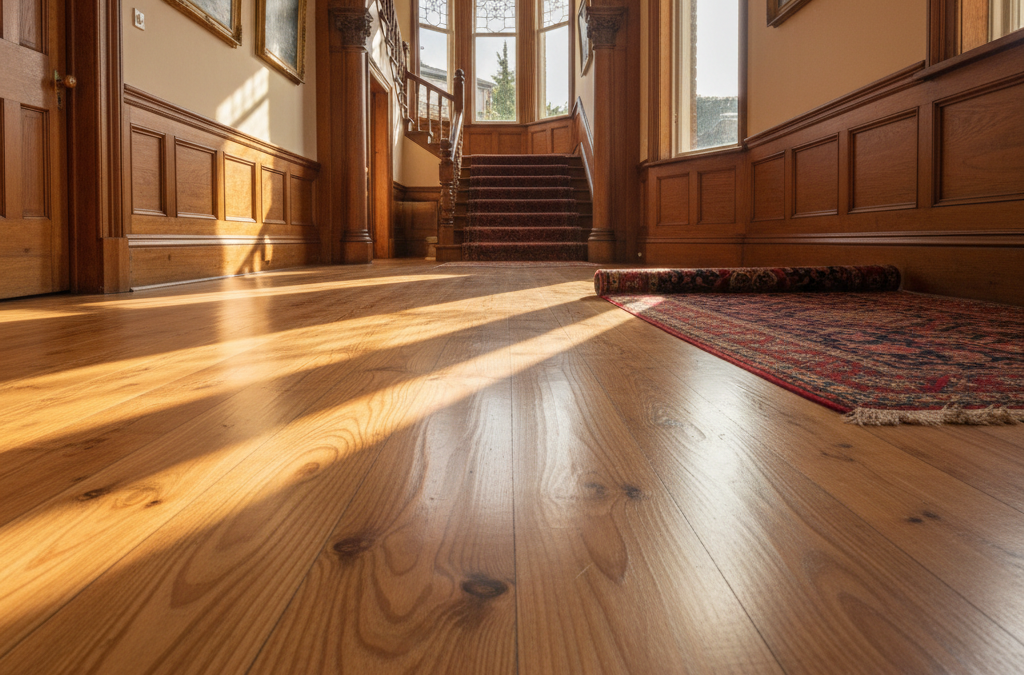
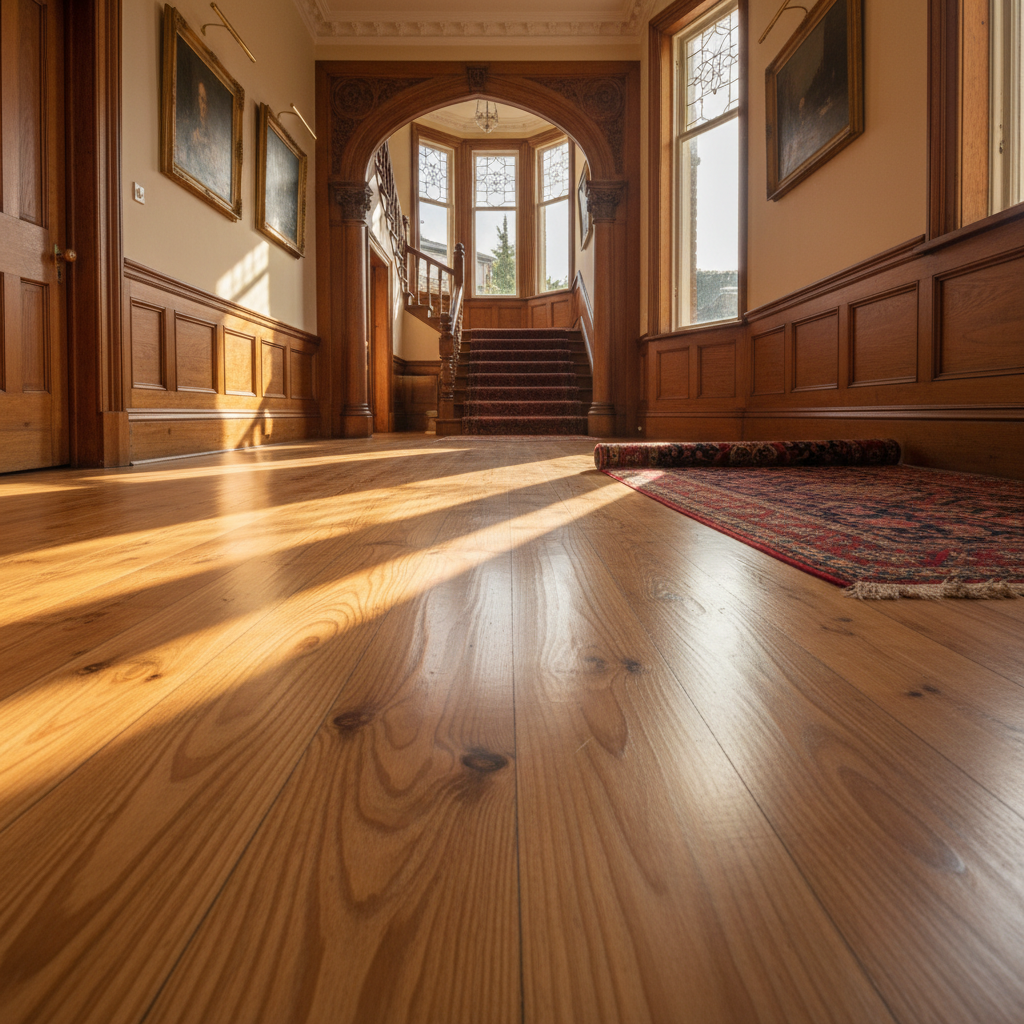
Beneath the carpets of countless period homes across Upminster lie beautifully aged Victorian and Georgian pine floorboards. These original timber features add immense character and value to a property. However, when initially exposed, they rarely look their best. Decades of heavy foot traffic, haphazard plumbing cuts, bitumen borders from old linoleum, and dark, ingrained dirt mask the natural beauty of the wood.
Attempting to restore these delicate heritage floors without the correct knowledge often leads to disaster. The soft nature of old pine makes it incredibly susceptible to aggressive sanding, which can thin the floorboards dangerously and compromise the structural integrity of the room.
The Risks of Amateur Restoration
Many homeowners hire a drum sander from a local tool shop, unaware of the damage it can inflict in untrained hands. Traditional hire machines often chatter across the floor, leaving deep gouges and wave-like patterns. Furthermore, period floors are typically fastened with old iron brads or nails. If these are not meticulously punched down before sanding, they will instantly shred expensive sanding belts and pose a serious fire risk due to sparks.
Beyond the physical sanding, the chemical reaction of finishes on old pine is a complex issue. Applying a modern, low-quality water-based lacquer directly to Victorian pine often results in “tannin pull”—a chemical reaction where the natural tannins in the wood are drawn to the surface, creating ugly, splotchy yellow or green discolorations.
The Expert Approach to Heritage Floorboards
Professional tradesmen approach period domestic floors with the care of a heritage restoration project. The process begins with securing loose boards, replacing irreparably damaged timber with reclaimed pine of a similar age, and ensuring all nails are set safely below the surface.
Pro-Tip: Tackling Uneven Pine with Zirconia
When dealing with severely cupped or uneven Victorian pine boards, we start the sanding sequence at an angle (usually 15-20 degrees to the grain) using a 40-grit Zirconia belt on a Lagler Hummel. This technique flattens the boards effectively without causing deep, linear gouges. Once flat, we perform a straight pass with the grain using the same grit, before progressing to 60, 80, and finishing with a 100-grit mesh screen on a Bona Flexisand.
Gap Filling: Banishing the Draughts
A common feature of period floorboards is the drafty gaps between them, caused by centuries of expansion and contraction. Proper gap filling is essential for both aesthetics and insulation. To understand more about our process, you can explore our advanced gap filling techniques.
For narrow gaps (under 3mm), we mix the clean, fine sawdust collected from the 80-grit sanding phase with a high-quality resin (such as Lecol 7500). This creates a custom-matched wood putty that seamlessly fills the voids. For wider gaps, traditional slivers—tapered strips of reclaimed pine glued and hammered into the gaps before being sanded flush—provide a permanent, historically accurate solution that won’t crack or fall out over time.
Water-Based Lacquer vs Hardwax Oil on Pine
Choosing the right finish for Victorian pine is critical. While highly durable water-based lacquers (like Bona Mega) are excellent, they require a specific primer to prevent tannin pull and edge bonding. If you prefer a more natural, warm aesthetic, hardwax oils are highly recommended.
We often use Osmo Polyx-Oil or Blanchon Hard Wax Oil for period homes. These penetrating oils nourish the dry, antique timber from within, enhancing the rich, warm patina of the old pine while providing a durable, micro-porous surface that allows the wood to breathe.
Pro-Tip: Avoiding Grain Raising
When applying water-based primers to old pine, “grain raising” can occur, where the moisture causes the wood fibres to swell and stand up, leaving a rough texture. To mitigate this, we always perform a gentle de-nib (light sanding) with a 120-grit screen after the first primer coat has dried. This knocks down the raised fibres, ensuring subsequent coats lay perfectly smooth.
For insights on restoring other domestic surfaces, such as kitchen countertops, read our guide on kitchen worktop refinishing. If you are dealing with a larger scale project, perhaps our commercial hall sanding article may be of interest.
Conclusion: Preserving Your Home’s History
Restoring Victorian or Georgian pine floorboards is an art form that demands patience, specialised equipment, and a deep understanding of timber behaviour. By employing expert tradesmen, authentic gap-filling techniques, and premium finishes, you can transform a neglected, draughty floor into a stunning, warm, and valuable asset for your Upminster property.