
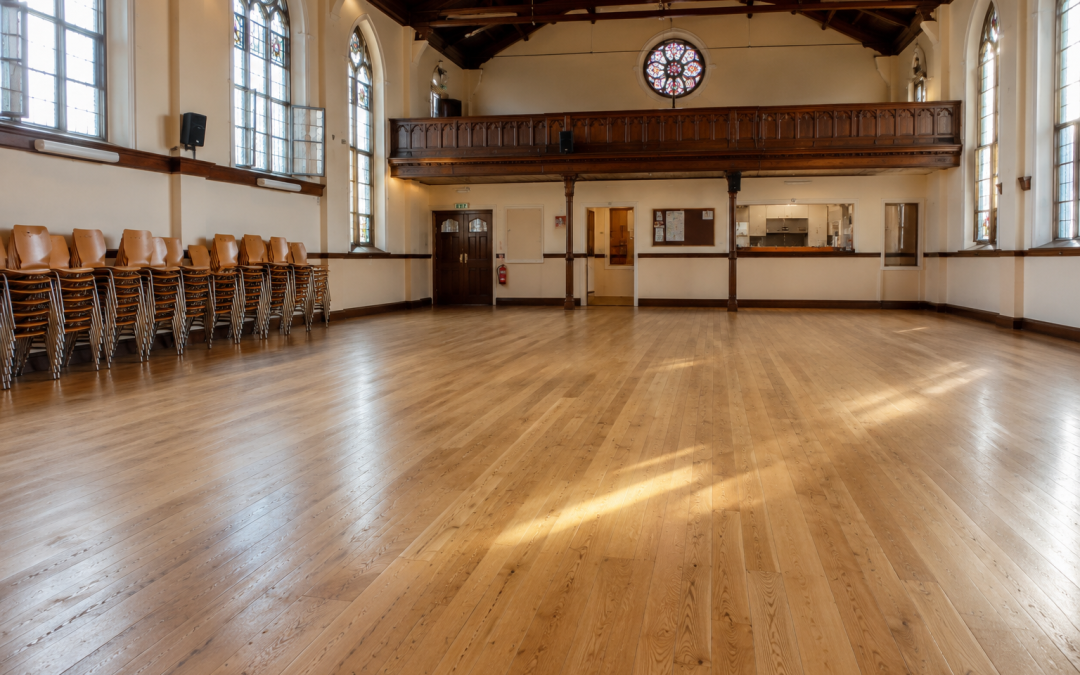
Upminster Church & Community Hall Floor Sanding Experts
Churches and community halls across Upminster RM14 continue to play an important role in local life, hosting everything from worship services and youth groups to charity events, concerts, meetings, and social gatherings. These busy buildings experience constant foot traffic, which inevitably leaves timber flooring scratched, worn, uneven, and difficult to maintain. At Upminster Floor Sanding, we specialise in restoring historic and modern wooden floors with professional techniques that preserve their character while improving durability, appearance, and safety.
Whether your building is close to Upminster High Street, Hall Lane, Corbets Tey, Cranham, or one of the area’s traditional churches and village halls, our experienced team provides practical restoration solutions tailored to your floor’s condition. Our specialist Church floor sanding in Upminster service helps remove decades of wear without compromising the integrity of the original timber, allowing your building to continue serving the local community for many years to come.
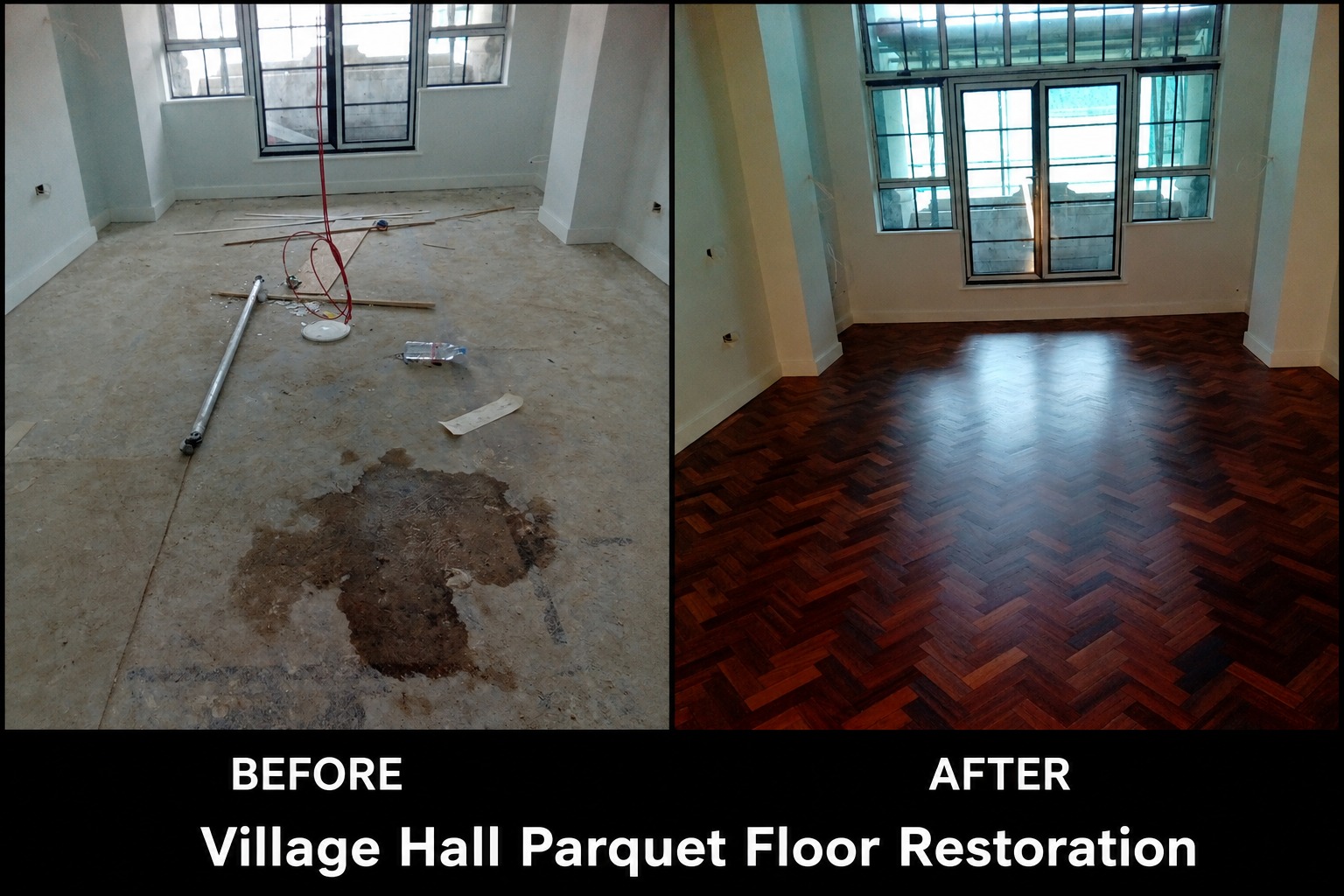
Professional Church & Community Hall Floor Restoration
Every church floor has its own history. Some contain Victorian pine boards that have survived generations of visitors, while others feature hardwood parquet installed during twentieth-century renovations. Community halls often experience even heavier use with tables, chairs, sporting activities and public events placing significant strain on the flooring.
Our professional Church floor restoration in Upminster service begins by understanding exactly how the building is used before recommending the most suitable restoration approach. Rather than replacing valuable timber unnecessarily, we aim to restore and protect existing floors wherever possible.
Why Church Floors Need Specialist Attention
Unlike domestic properties, church and community hall floors experience varying levels of traffic throughout the week. Heavy furniture, regular cleaning, seasonal moisture changes, and historic building movement can all affect the timber.
Common issues we regularly encounter include:
- Deep surface scratches and worn finishes
- Loose or noisy floorboards
- Damaged parquet blocks
- Water staining around entrances
- Large gaps between timber boards
- Uneven previous repairs
- Dark staining from years of polish build-up
- Slippery worn coatings affecting safety
Each problem requires a different restoration approach rather than a one-size-fits-all solution.
Our Church Floor Restoration Process
1. Initial Assessment & Project Planning
Every project starts with a thorough inspection of the timber floor. We assess the species of wood, moisture levels, structural stability, previous coatings, repairs, and overall condition.
Many clients obtain an initial quotation simply by sending photographs, room dimensions or a short video walkthrough. Larger churches or heritage buildings may benefit from a site survey to fully assess access, scheduling and restoration requirements.
We also discuss building usage to minimise disruption, allowing restoration work to be completed around services, community events, weddings, school activities or other bookings.
2. Timber Repairs, Board Replacement & Gap Filling
Before sanding begins, damaged flooring is repaired wherever practical.
This may include:
- Replacing broken timber boards
- Repairing loose parquet blocks
- Securing movement and squeaks
- Fixing damaged edges
- Carrying out sympathetic repairs that match the existing timber
- Gap filling where appropriate to improve appearance and reduce draughts
Our aim is always to preserve as much original flooring as possible while ensuring long-term structural reliability.
3. Professional Dust-Controlled Sanding
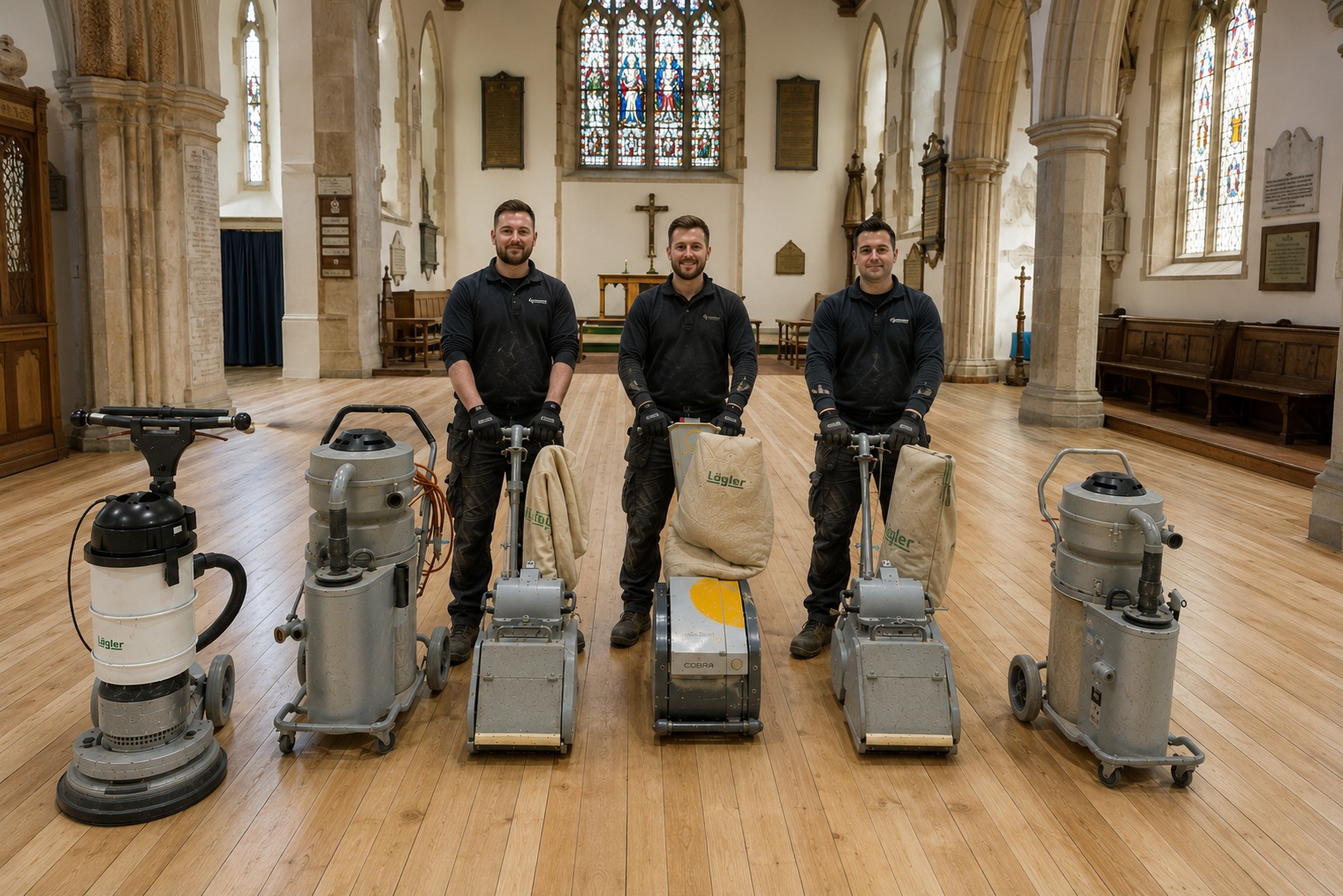
Once repairs are complete, the floor is sanded using modern dust-controlled commercial machinery. Progressive sanding removes old varnishes, paints, waxes, surface damage and minor imperfections while producing a smooth, even finish ready for sealing.
Dust extraction systems significantly reduce airborne dust, making the process cleaner for sensitive church interiors and reducing disruption to surrounding areas.
During sanding we also remove:
- Black water stains where possible
- Old adhesive residue
- Uneven coatings
- Surface scratches
- Minor cupping and wear patterns
4. Professional Finishing Options
The final finish depends on how the building is used. Churches, community halls and multi-purpose venues all have different durability requirements.
Popular options include:
- Commercial polyurethane lacquer
- Natural penetrating oils
- Hardwax oil finishes
- Low-sheen satin finishes
- Ultra-matt contemporary finishes
- Heavy-duty two-component (2K) commercial coatings
We regularly use premium systems from Bona, Loba, Osmo, and Junckers, selecting products according to expected traffic levels, maintenance requirements and the condition of the timber.
5. Aftercare & Long-Term Maintenance
Proper maintenance significantly extends the life of any restored timber floor.
Following completion, we provide practical advice covering:
- Cleaning methods
- Recommended maintenance products
- Furniture protection
- Entrance matting
- Periodic maintenance coats
- Future refurbishment planning
Preventative maintenance often delays the need for another full sanding project by many years.
Working Around Your Schedule
We understand that churches and community halls rarely close completely. Services, meetings, charity events and community activities must continue wherever possible.
For this reason, projects are carefully planned around your diary. Evening work, weekend scheduling, school holiday periods and phased restoration can all be arranged where appropriate to minimise disruption.
Safe Working Practices
Safety remains a priority throughout every project.
- Dust-controlled machinery
- Professional risk assessments
- Clear work zone management
- Suitable drying times before reopening
- Careful protection of surrounding fixtures and furnishings
- Professional commercial equipment throughout
Commercial & Heritage Flooring Experience
Our team has extensive experience restoring timber flooring within churches, schools, parish halls, village halls, public buildings and commercial premises. Every restoration is approached according to the building’s age, timber species, historical significance and intended future use.
If you’re looking for an experienced Church floor sanding contractor in Upminster, we provide practical advice based on genuine flooring condition rather than recommending unnecessary work.
Why Choose Our Upminster Floor Sanding Specialists?
- Over 25 years of commercial timber flooring experience
- Specialists in church and community hall restoration
- Modern dust-controlled sanding equipment
- Professional repair and restoration techniques
- Commercial-grade finishing systems
- Flexible scheduling around public buildings
- Clear quotations with no unnecessary work
- Experienced with heritage timber flooring
Frequently Asked Questions
How long does church floor sanding usually take in Upminster?
The duration depends on the size and condition of the floor. Most church halls and community halls can be completed within 2 to 5 days, including repairs, sanding, finishing, and drying time. Larger or heritage buildings may require additional time.
Can you restore old church floors without replacing the timber?
Yes. In many cases, original timber floors can be successfully restored. We repair damaged boards, secure loose sections, replace only where necessary, and carefully sand the surface to preserve the floor’s character and history.
Is the sanding process dusty?
We use modern dust-controlled sanding equipment that captures the vast majority of dust produced during the restoration process. While no sanding is completely dust-free, disruption is kept to a minimum, making it suitable for churches and public buildings.
What types of timber floors can you restore?
We restore solid oak, pine, hardwood, parquet, engineered timber floors with a suitable wear layer, and many traditional church and community hall floors. Each floor is assessed before work begins to determine the most appropriate restoration method.
Which finish is best for a busy church or community hall?
Commercial-grade lacquers and two-component (2K) finishes are popular because they provide excellent durability and are easy to maintain. We can also recommend hardwax oils or natural oils where a more traditional appearance is preferred.
Can repairs be carried out before sanding?
Absolutely. We regularly replace damaged boards, repair loose parquet blocks, fix squeaky floorboards, fill gaps where appropriate, and carry out other timber repairs before the sanding process begins.
Will the floor need to be closed during the restoration?
Yes. For the best results and to allow finishes to cure properly, the area being restored should remain closed during the work. We can often schedule projects around church services, community events, and school holidays to minimise disruption.
How often should a church floor be professionally restored?
This depends on foot traffic and maintenance. Busy church halls may benefit from a maintenance coat every few years, while a full sanding and restoration is often only needed every 10 to 20 years if the floor is properly cared for.
Can stained or heavily worn wooden floors be restored?
In most cases, yes. Surface stains, old varnish, scratches, and general wear can usually be removed through professional sanding. Deep water damage or structural issues will be assessed individually, and suitable repair options will be recommended.
How can we request a quotation for our church floor?
You can call 0800 335 7565 or send photographs, approximate measurements, and a short video of the floor via WhatsApp or email. This allows us to provide an initial assessment quickly, with a site visit arranged if further inspection is required.
Request Your Church Floor Assessment
If your church or community hall floor has become scratched, uneven or difficult to maintain, we’re happy to provide honest advice on the most suitable restoration solution.
Call 0800 335 7565 or visit https://upminsterfloorsanding.co.uk/ to request a fast quotation. You can also send photographs, measurements or a short video via WhatsApp or email for an initial assessment before arranging a convenient site visit if required.