
Key Takeaways
- Problem: Commercial wooden floors in sports halls, schools, and gyms suffer from extreme wear, compromising safety and aesthetics.
- Agitation: Traditional sanding creates massive dust clouds, extending downtime and causing potential health hazards in public spaces.
- Solution: Advanced dust-free sanding machines combined with high-traffic commercial finishes like Bona Traffic HD ensure a rapid, clean, and durable restoration.
The Challenge of High-Traffic Commercial Timber
In the bustling region of Upminster, commercial properties—from historic community halls to modern school gymnasiums—rely heavily on robust timber flooring. However, these surfaces face a relentless barrage of foot traffic, sports equipment impact, and general wear and tear. Over time, the protective sealants degrade, leaving the raw floorboards vulnerable to deep scratches, moisture ingress, and structural damage.
Ignoring these signs of deterioration is not just an aesthetic issue; it can lead to slip hazards, non-compliance with health and safety regulations, and ultimately, the need for a full, costly floor replacement. The structural integrity of Granwood or solid oak sports floors must be maintained through professional commercial floor sanding.
Why Traditional Methods Fail in Commercial Settings
Historically, restoring a large-scale commercial floor was a logistical nightmare. Traditional sanders generated immense volumes of airborne dust, settling into air conditioning units, coating fixtures, and requiring days of exhaustive cleanup. For a busy Upminster school or a popular local pub, this extended downtime directly translates to lost revenue and severe disruption.
Furthermore, outdated equipment often leaves uneven sanding marks, a problem exacerbated in large, open spaces where natural light highlights every imperfection. If you are managing a commercial space, you cannot afford the luxury of extended closures or subpar finishes.
The Modern Solution: Dust-Free Commercial Floor Sanding
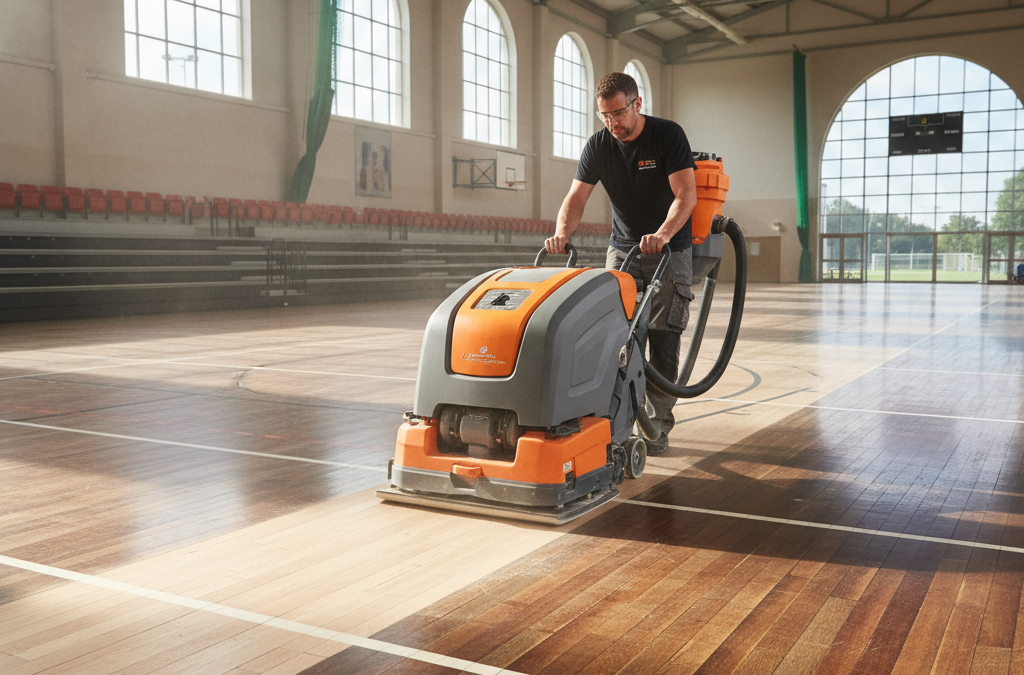
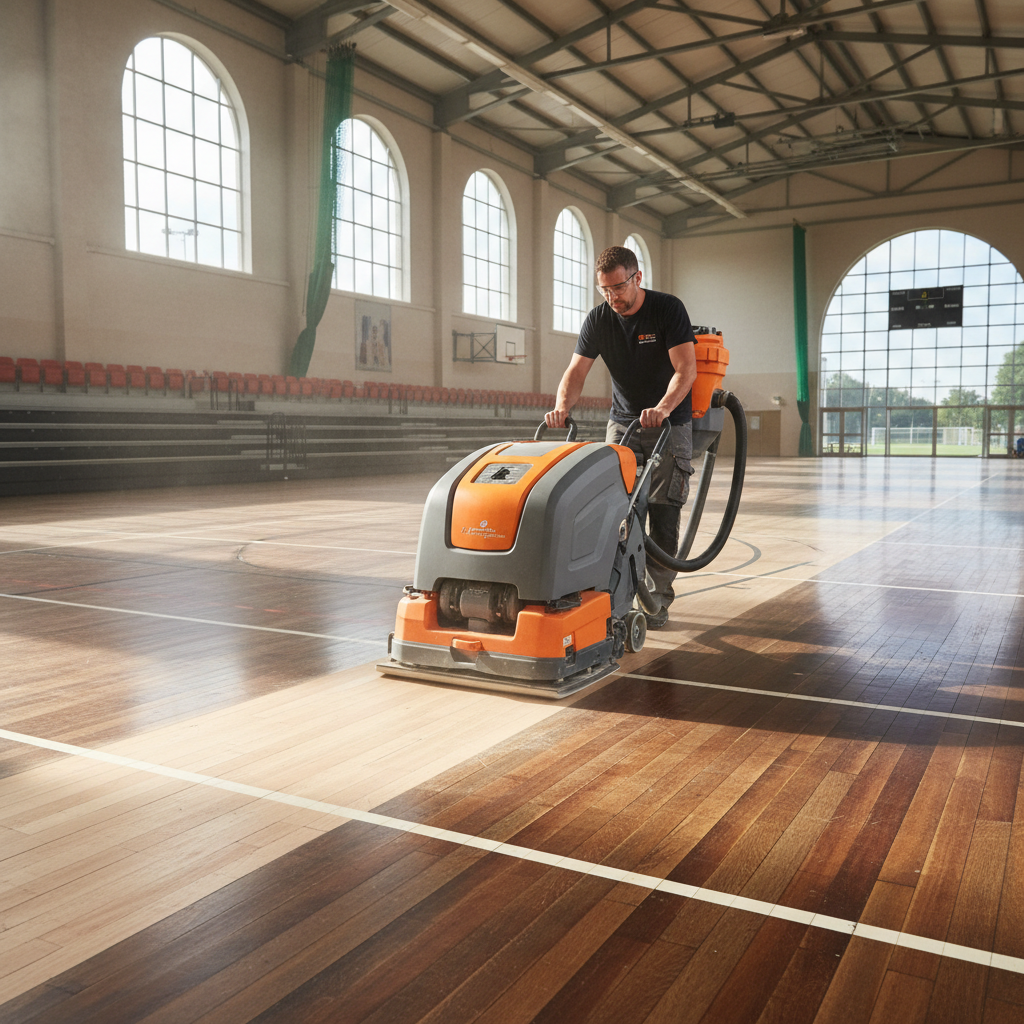
Today, the gold standard in commercial floor restoration involves state-of-the-art dust extraction technology. By utilising advanced machinery like the Bona Belt, Lagler Hummel, and the versatile Frank Spider, professional tradesmen can extract up to 99.9% of dust at the source.
Pro-Tip: The Commercial Grit Sequence
When tackling heavily lacquered or uneven Granwood sports floors, our tradesmen typically begin with a coarse 40-grit Zirconia abrasive. This aggressive first pass strips away decades of accumulated gymnasium lines and stubborn polyurethane. We then progress systematically through 60-grit, 80-grit, and finally 120-grit using a Bona Flexisand to ensure a perfectly smooth, scratch-free surface ready for finishing.
Selecting the Right Commercial Finish
Once the floorboards are flawlessly sanded, the choice of finish dictates the floor’s longevity. For high-traffic areas like schools, colleges, and sports halls, durability is paramount. While natural hardwax oils are beautiful for domestic settings, commercial environments typically demand the resilience of two-component water-based polyurethanes. Understanding the differences is vital, which is why we suggest reading our wood floor maintenance guide for a complete breakdown of water-based vs hardwax oil.
We highly recommend products like Bona Traffic HD or Junckers HP Commercial. These advanced lacquers offer superior scuff resistance and rapid curing times.
Pro-Tip: Curing Times in UK Humidity
When applying Bona Traffic HD in typical UK humidity, we recommend applying three coats for a commercial sports hall. While the floor can often withstand light foot traffic within 24 hours, it is crucial to wait a full 72 hours before allowing heavy sports equipment or dragging tables across the surface. Ensure the area is well-ventilated to expedite the curing process.
The Importance of Court Marking and Safety
For school halls and gyms, the restoration process isn’t complete without precise court line markings. After the initial coats of lacquer are applied and lightly buffed, specialist paints are used to demarcate badminton, basketball, and volleyball courts. A final encapsulating coat of lacquer is then applied over the lines, preventing them from wearing away under intense use. It is crucial to use slip-resistant finishes that comply with British Standards for sports flooring to ensure the safety of athletes and students. You can further customise your space by reviewing our wood floor staining options.
VAT and Commercial Budgeting
When budgeting for a commercial floor restoration project in Upminster, it’s vital to factor in VAT. Our transparent quoting process ensures you understand all costs upfront, with no hidden surprises. Refinishing an existing timber floor is almost always significantly more cost-effective—and environmentally friendly—than a complete replacement, making it a prudent investment for facility managers.
For authoritative guidelines on commercial wood floor standards, you can refer to the National Wood Flooring Association (NWFA).
If you have recently restored your home’s flooring instead, you might be interested in our insights on domestic floor sanding techniques.
Conclusion: Trust the Commercial Specialists
Restoring a commercial wooden floor requires specialised equipment, premium finishes, and the expertise of seasoned tradesmen. By choosing a dust-free sanding approach and high-performance lacquers, you can revitalise your sports hall, pub, or community centre with minimal disruption. For all your commercial floor sanding needs in Upminster, rely on heritage restoration techniques combined with modern technology to deliver impeccable results.