
Key Takeaways
- Problem: Even the most exquisitely restored wooden floors will deteriorate, scratch, and lose their lustre without a proper maintenance regimen.
- Agitation: Using off-the-shelf supermarket cleaners can strip away protective hardwax oils and degrade water-based lacquers, leading to premature wear and costly resanding.
- Solution: Implementing a professional aftercare routine using manufacturer-approved products (like Bona Wood Floor Cleaner or Osmo Wash and Care), monitoring moisture content, and scheduling periodic professional buffing ensures your floors last a lifetime.
The Reality of Wood Floor Ownership
Investing in wood floor restoration for your London or Surrey property transforms your living space, whether it’s elegant oak parquet or wide solid timber floorboards. However, the completion of the sanding and sealing process is not the end of the journey; it is merely the beginning of proper wood floor maintenance.
Wood is a hygroscopic, natural material. It reacts to the environment, particularly fluctuations in humidity and temperature. In the UK, central heating during the winter drastically reduces indoor humidity, causing timber to shrink and gaps to appear. Conversely, humid summers can cause the wood to expand. Understanding and managing the “moisture content” of your home is the first step in preserving your newly finished floors.
The Danger of Incorrect Cleaning
The most common cause of premature floor degradation we see as tradesmen is improper cleaning. Supermarket multi-purpose cleaners often contain harsh alkaline chemicals, ammonia, or abrasive agents. When used on a floor finished with premium hardwax oil or lacquer, these chemicals strip the protective layer away, leaving the raw grain exposed to dirt and moisture.
Furthermore, excessive water is the enemy of timber. Traditional mopping forces water between the floorboards, leading to swelling, cupping, and the eventual breakdown of the finish. Always use a lightly damp, well-wrung microfiber mop paired with a pH-neutral, manufacturer-approved cleaner.
Maintaining Oiled vs. Lacquered Floors
Your maintenance approach must be tailored to your specific finish. Understanding the “water-based vs hardwax oil” distinction is crucial.
Hardwax Oil Maintenance
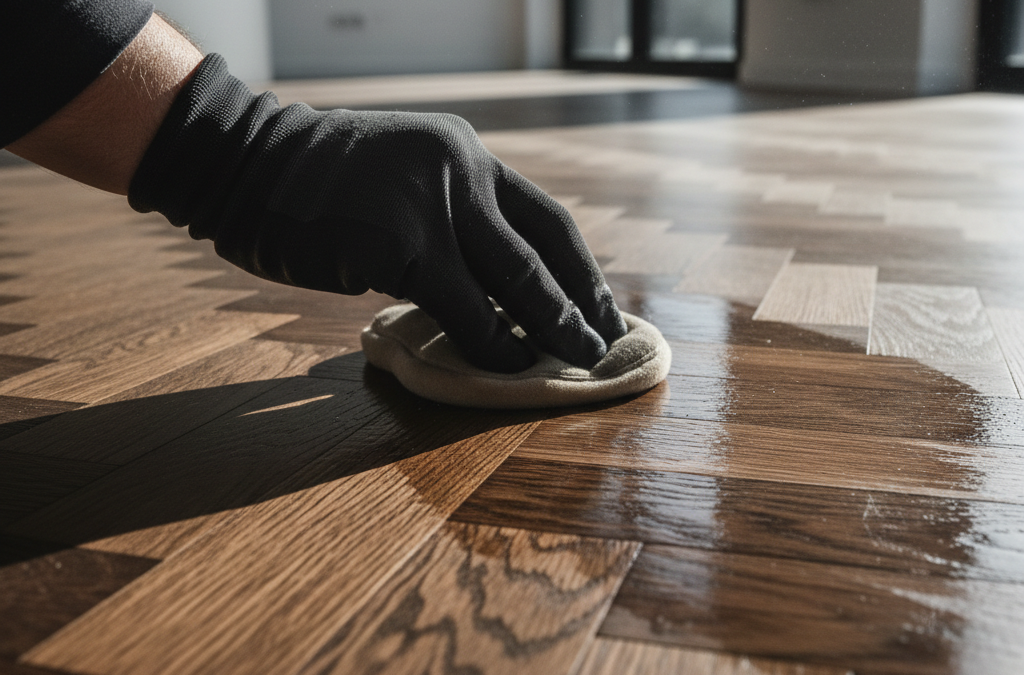
Floors finished with penetrating oils, such as those from Osmo or Blanchon, require regular nourishment. For weekly cleaning, use Osmo Wash and Care. For periodic maintenance (every 6-12 months, depending on traffic), applying a Liquid Wax Cleaner will rejuvenate the protective sheen and buff out minor scuffs without the need for a full resand.
Water-Based Lacquer Maintenance
Lacquered floors (often finished with Bona Traffic or Loba) create a protective plastic-like film over the wood. These floors should be swept or vacuumed daily (using a soft brush attachment) to remove abrasive grit. For wet cleaning, a Bona Spray Mop with their specialized Wood Floor Cleaner is ideal. When a lacquered floor begins to show widespread micro-scratches, a professional “screen and recoat” (light buffing and application of a fresh coat of lacquer) will restore it completely. If you are dealing with intricate block flooring, see our tips on parquet floor repairs.
Advanced Techniques: Water Popping and Buffing
If you are considering restaining your floors in the future, you may hear the term “water popping.”
Pro-Tip: The Secret of Water Popping
Water popping is a professional technique used prior to applying a stain or coloured oil. After the final sanding sequence, we lightly and evenly mist the raw timber with water. This intentionally causes “grain raising,” opening the pores of the wood. Once completely dry, the floor absorbs stains much more deeply and evenly, resulting in a richer, more vibrant colour that cannot be achieved on closed, sanded grain.
Professional buffing is another essential service. Using a rotary machine fitted with a white or red pad, we can deep clean and burnish maintenance oils into the timber, ensuring an incredibly hardwearing and visually stunning satin or matte finish. If you have a commercial space, you can read about heavy-duty maintenance in our heavy-duty commercial maintenance guide. For period homes, see our guide on restoring Victorian pine.
Conclusion: Protect Your Investment
Consistent, correct maintenance is the key to preserving the beauty and longevity of your wooden floors in London and Surrey. By understanding the specific needs of your finish, controlling your indoor climate, and avoiding harsh supermarket chemicals, you can ensure your floorboards and parquet remain a stunning feature of your property for decades to come. When in doubt, always consult with professional tradesmen for periodic deep cleaning and rejuvenation services.